Why Air Dryers Need Molecular Sieve Desiccants for Effective Moisture Removal
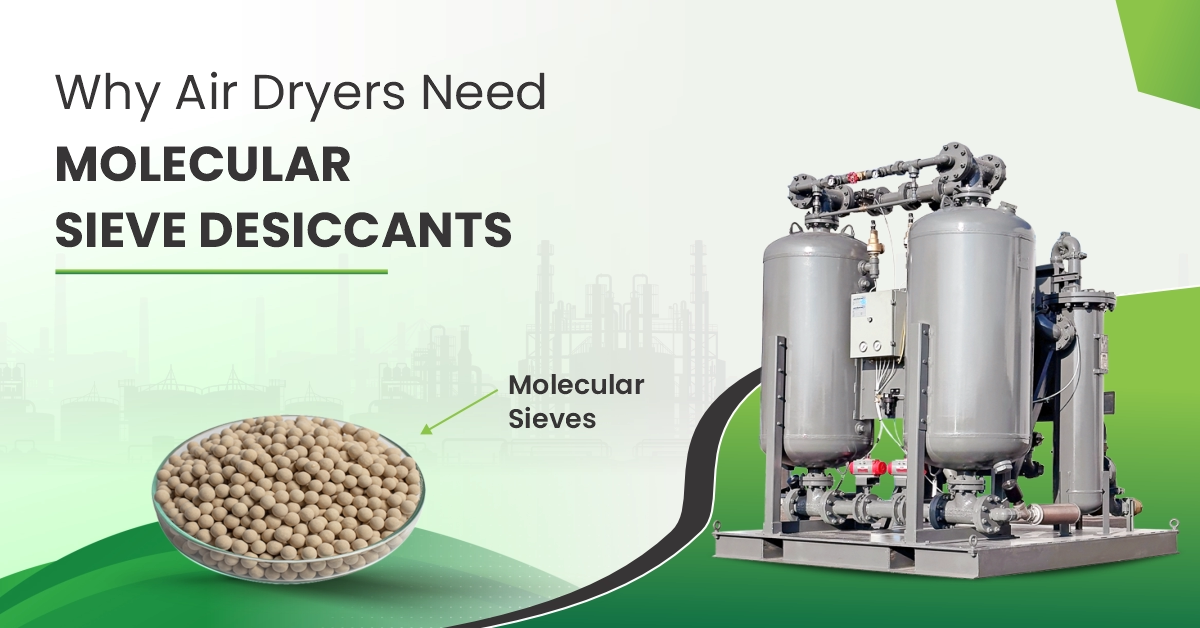
Compressed air powers everything from pneumatic tools and packaging lines to instrumentation and process plants, yet it carries a hidden problem: water. Every cubic metre of air drawn into a compressor brings moisture with it, and once that air is compressed and cooled, the vapour condenses into liquid. That is why an industrial air dryer is not an optional extra but a core part of any compressed air treatment system.
At the heart of most desiccant-based dryers sits a molecular sieve desiccant. This guide explains how moisture removal from compressed air works, why zeolite molecular sieve performs so well inside a desiccant air dryer, and how to choose the right grade for your system.
Why Moisture in Compressed Air Causes Costly Problems
Untreated compressed air damages both equipment and product quality. The most common problems include:
- Corrosion of pipes, valves, receivers and cylinders
- Freezing of air lines and fittings in cold conditions
- Wear and early failure of pneumatic tools and actuators
- Contaminated products in food, pharma, paint and electronics
- Higher maintenance costs and unplanned downtime
Effective industrial moisture control therefore starts with removing water before it reaches the point of use, and that is exactly the job of the air dryer.
How an Adsorption Air Dryer Works
An adsorption air dryer passes compressed air through a bed of desiccant. Water molecules are held on the surface and inside the pores of the material, while dry air continues downstream. Twin-tower designs work in alternating cycles: one tower dries the air while the other is regenerated. In a pressure swing adsorption dryer, regeneration uses a portion of the dried air at lower pressure to carry moisture out of the bed, so the desiccant can be reused for thousands of cycles. This is the basis of modern compressed air drying, and the quality of the desiccant decides how dry the air really gets.
Why Molecular Sieve Desiccant Is the Preferred Choice
Not every desiccant can handle the demands of a continuous, high-pressure dryer. Molecular sieves are crystalline zeolites with perfectly uniform pores, so they trap water selectively and strongly. Their main advantages are:
- Very low dew points: Molecular sieve can typically support pressure dew points of -40°C and well below, which a low dew point air dryer needs for critical processes.
- Strong performance at low humidity: It keeps its capacity when air is warm or already dry, where other desiccants lose ground.
- Selective adsorption: Pore size decides which molecules enter, so water is captured first.
- Stability through cycling: Good-quality beads withstand repeated pressure swings with minimal dusting.
- Long service life: Fewer changeovers mean lower lifetime cost.
Understanding Dew Point and Air Quality
Dew point is the temperature at which water vapour begins to condense, and the lower it is, the drier the air. The ISO 8573-1 standard grades compressed air purity by pressure dew point, with Class 2 corresponding to -40°C and Class 1 to -70°C. Refrigerated dryers generally stop at around 3°C, which is not enough for outdoor lines, cold environments or moisture-sensitive processes. Molecular sieve closes that gap. For plants that cannot risk condensation, freezing or product contamination, a molecular sieve desiccant is the practical route to a stable, low dew point.
3A and 4A: Which Grade Suits an Air Dryer?
The two grades most commonly used in dryers differ mainly in pore size:
- 3A Molecular Sieve: Its 3-angstrom pores admit moisture while excluding larger molecules such as carbon dioxide and most hydrocarbons. This selectivity limits co-adsorption and suits dryers where precise moisture removal and long cycle life matter.
- 4A Molecular Sieve: With slightly larger pores, it offers high moisture capacity and is widely used in general-purpose dryers that face heavier moisture loads.
Molecular sieve for air dryers is available in both grades, and the right choice depends on dryer design, operating pressure and the dew point target.
What to Look for in Air Dryer Desiccant Beads
Quality varies widely between suppliers, so it pays to check a few basics. Good air dryer desiccant beads should offer:
- Suitable bead size: A balance between surface area and pressure drop
- High crush strength: Resistance to breakdown under pressure swings and vibration
- Strong adsorption capacity: Reliable water uptake at actual operating conditions
- Low dust: Protection for downstream filters, valves and instruments
- Sealed, fresh packaging: Molecular sieve picks up moisture quickly once exposed to air
A dependable air dryer desiccant also needs a dependable source. Look for a supplier that offers 3A, 4A, 5A and 13X molecular sieves, along with carbon molecular sieve and powder, so you can match the product to the application.
Industries That Rely on Molecular Sieve Air Dryers
Dry compressed air matters across many sectors. Automotive plants and air brake systems need it to prevent freezing and valve damage, while pharma and food units need it to protect product purity. Paint and coating lines, glass insulation, textile mills and petrochemical sites also depend on dependable moisture control to keep processes stable and products consistent.
Common Mistakes to Avoid
Even the best desiccant underperforms when it is misapplied. Watch out for:
- Choosing a desiccant that cannot reach the target dew point
- Ignoring bead size and crush strength
- Skipping inlet filtration, which lets oil and liquid water reach the bed
- Delaying desiccant replacement beyond the service interval
- Mixing old and new beads or different grades in the same tower
Conclusion
Air dryers need molecular sieve desiccants because few other materials combine low dew points, selective adsorption and long cycle life in continuous pressure swing service. From 3A to 4A, the right grade, bead size and crush strength turn a compressed air dryer desiccant into a safeguard for equipment, products and uptime.
Whether you are specifying a new adsorption air dryer or refilling an existing one, choose a supplier who can match the grade to your dew point target. Select the right molecular sieve desiccant for your compressed air treatment needs.
